

The Case of the Glass Key
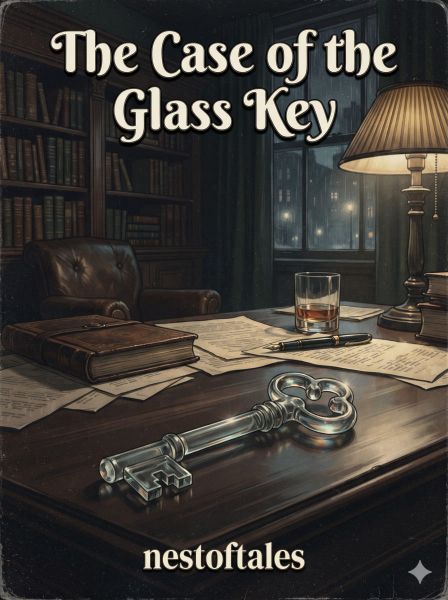
The characters and events in this story are entirely fictitious. They do not resemble anyone, and any resemblance to any region or real-life persons is purely coincidental.
Episode 1: The Shards on the Floor
Glass collector Simon Vance stepped into his private display gallery, his breath catching in his throat as his eyes adjusted to the dim morning light. The heavy security door was unlocked, and delicate, transparent crystal shards were scattered across the Persian rug like frozen raindrops. At the center of the room sat his custom-built borosilicate display case, its thick laminated walls smashed open with calculated, surgical precision. Simon rushed forward, his hands trembling as he inspected the empty velvet mount where the imperial crystal chalice had rested just hours before. There were no bloodstains, no heavy tool marks, and no signs of a clumsy break-in, suggesting a professional thief with specialized thermal tools had bypassed the alarms. He immediately notified the municipal authorities, setting off a high-stakes investigation into a crime that defied standard criminal methodology. Detective Nora Price arrived within minutes, her keen eyes scanning the glittering debris on the floor for microscopic clues left behind by the elusive intruder. The shards seemed almost organic in their fracture patterns, glittering with a strange, internal prismatic fire that caught the pale morning sunbeams. Nora knelt beside the display case, pulling a pair of latex gloves and tweezers from her tactical bag to begin the delicate collection process. The case of the glass key had officially begun, plunging the historic quarter into a chilling mystery of crystalline deception.
Fragile Evidence
Detective Nora Price carefully swept the crystal fragments into a padded evidence tray, noting that they formed an intricately cut functional skeleton key. Unlike traditional steel lockpicks, this delicate instrument was forged from heat-tempered borosilicate glass, capable of applying torque without bending or snapping under pressure. Nora examined the notched blade under her pocket loupe, marveling at the microscopic tumbler grooves etched into the transparent metal-like material. The glassmaker who crafted this key possessed absolute mastery over thermal expansion coefficients and refractive indices, an artisan of rare and dangerous genius. She transported the tray to the forensic laboratory for spectroscopic analysis, hoping to trace the unique chemical impurities trapped within the silica structure. The laboratory tests revealed tiny traces of rare mineral fluxes sourced exclusively from the historic glass-blowing district on the outer canal ring. Nora realized the thief had not merely broken into the gallery; they had left behind a self-destructing calling card that dissolved upon exposure to high-frequency ultrasonic vibrations. The glass key was a masterpiece of ephemeral engineering, designed to vanish into dust if handled incorrectly by untrained investigators. With the forensic blueprint in hand, Nora prepared to dive deep into the smoky, glowing workshops of the old artisan quarter to unmask the shadowy creator.