

The Lantern Maker's Workshop
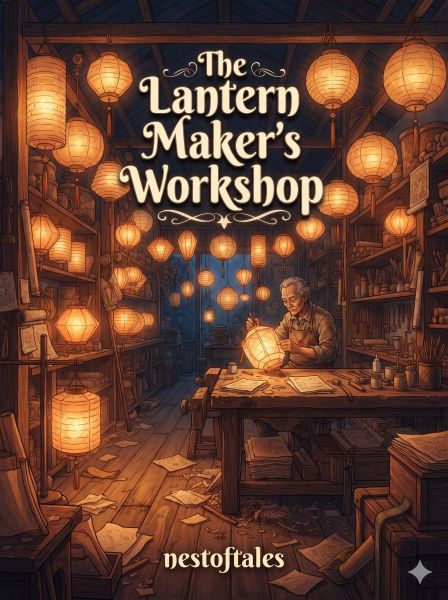
Episode 1: The Fading Glow
Down in the winding cobblestone alleyways of the lantern district, master craftsman Kenji Vance operated a modest workshop crafting traditional paper lanterns. Kenji’s workshop, known as “Luminary House,” was famous for producing hand-painted silk and bamboo lanterns that illuminated village festivals. However, in recent years, cheap mass-produced plastic lamps imported from the capital had begun replacing traditional handmade lighting. Kenji sat at his workbench, staring sadly at a fading electric bulb inside a plastic casing that lacked any artisanal soul. His daughter, Suki, a twenty-four-year-old industrial designer who had studied lighting technology abroad, stepped into the workshop. Suki set down her travel bags, immediately noticing the gloom hanging over her father and his dusty, unsold inventory. “The traditional craft isn’t dying because people hate beauty, Dad; it’s dying because we haven’t adapted our lighting to modern needs,” Suki diagnosed. Kenji sighed, adjusting his spectacles as he wiped a speck of rice-paste glue from his weathered wooden workbench. “Modern needs? People just want cheap, disposable plastic glare that requires no craftsmanship or patience,” Kenji muttered. Suki walked over, picking up a delicate bamboo rib and holding it up to the pale afternoon light through the window. “What if we combine your master bamboo framing with modern LED technology and smart dimming controls?” she proposed. Kenji paused, looking at his daughter with a mixture of skepticism and hidden, long-suppressed creative hope. The fading glow of his workshop ignited into a fierce, collaborative spark to reinvent the ancient craft.
The Bamboo Rib
The following morning, Suki and Kenji began their collaborative design experiments by refining the foundational structural element: the bamboo rib. Traditionally, Kenji split seasoned green bamboo stalks by hand using a heavy cleaver, shaving each strip down with a draw-knife. Suki introduced a precision jig she had designed on her computer, allowing them to cut uniform, flexible ribs with mathematical exactness. Working together in the sunny courtyard, Kenji taught Suki how to heat-bend the green bamboo strips over an open charcoal flame. “You have to listen to the wood as it warms; if you force the bend too fast, the fibers will snap,” Kenji instructed carefully. Suki adjusted her grip, applying gentle, steady pressure until the heated bamboo curved into a flawless, elastic arch. They assembled a skeletal globe framework using the precision-bent ribs, marveling at its incredible strength-to-weight ratio. “That frame is lighter than a feather and stronger than steel wire,” Suki praised, admiring their handiwork. Kenji smiled broadly, realizing that his daughter’s modern engineering tools had elevated his traditional craft to new heights. The bamboo rib formed the unbreakable structural spine of their new hybrid lighting collection.