

The Whispering Windows of Veridia
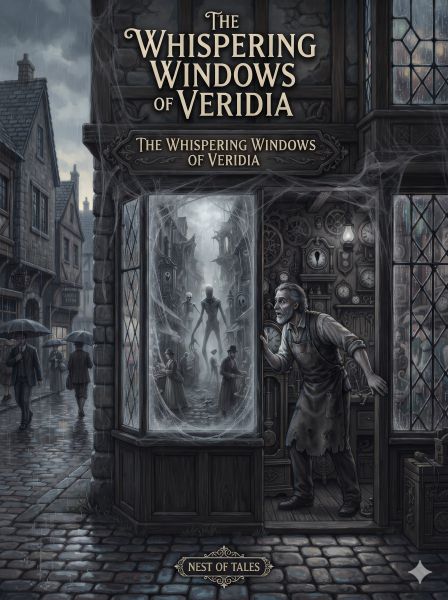
Episode 03: The Pane of Amber Light
In the dusty, cluttered workshop of his antique restoration shop in Marrow’s End, artisan Julian Vance worked by the warm glow of a shaded desk lamp, painstakingly repairing a Victorian church window panel composed of rare, honey-colored amber glass. The glass was thick, heavy, and radiated a faint, residual heat that felt unnatural for an inanimate object sitting in a drafty cellar room. Julian was an expert in medieval leadwork, but this particular commission had come with a chilling warning note from the church’s parish priest: “Do not look through the amber pane after the church bells toll midnight, for the light does not illuminate the room—it illuminates what is standing beside you.” Julian had scoffed at the superstition, dismissing it as gothic marketing, and continued scraping away centuries of calcified grime from the lead cames. As the grandfather clock in the corner chimed twelve slow, heavy strokes, the amber glass suddenly flared with an intense, blinding radiance that flooded the entire basement with a sickly golden hue. The electric lamps in the room flickered and died, leaving only the amber glow casting long, distorted shadows across the stone walls. Julian blinked against the glare, instinctively looking through the center of the restored glass panel to see how it refracted the basement space. What he saw through the amber tint froze the blood in his veins. The basement around him was no longer his workshop; it was a massive, subterranean charnel house dripping with black blood and hung with rusted meat hooks. And standing right beside his workbench—so close he could smell the putrid stench of embalming fluid and rotting flesh—was a towering, skeletal entity wearing the tattered robes of a medieval monk, its eyeless sockets staring directly into his soul through the glass. Julian tried to smash the pane with his hammer, but his arms felt heavy as lead, paralyzed by an invisible force as the skeletal figure inside the amber light slowly raised a long, bony finger and pressed it against the glass directly opposite his face.
The Voice from the Second Floor
The dilapidated rooming house at 14 Gallows Lane in the industrial district of Iron-Gate had been condemned for structural instability, but homeless veteran Marcus Turner had broken in through a basement window to escape the freezing autumn rain. The building was a rotting labyrinth of narrow hallways, water-damaged ceilings, and exposed electrical wires hanging like dead serpents from the plaster. Marcus wrapped himself in a damp wool blanket in a corner of the ground-floor parlor, listening to the rain drumming a frantic rhythm against the corrugated tin roof. Just as he was drifting off to sleep, a sharp, distinct sound cut through the ambient noise of the storm: the slow, measured sound of heavy boots walking back and forth across the ceiling directly above him on the second floor. Marcus sat up straight, his military instincts flaring instantly. The municipal demolition notice posted on the front door explicitly stated that the upper floors had suffered a catastrophic ceiling collapse six months ago, rendering them completely inaccessible from the stairwell. Yet, the footsteps continued—thud, pause, thud, pause—moving rhythmically back and forth above his head. Then, a human voice spoke from the darkness of the second-floor void, clear and conversational, though the words were muffled by fallen plaster and rotting timber. “You’re sitting in my chair, soldier,” the voice rasped, carrying an unmistakable note of malicious amusement. Marcus scrambled to his feet, grabbing his heavy iron flashlight as a weapon, and stared up at the water-stained ceiling plaster overhead. A slow drip of warm, reddish-brown water began to leak through a crack in the plaster, splashing onto the floorboards right beside his boot. He backed away slowly toward the front door, but the voice above him grew louder, shifting from a single tone to a chorus of overlapping screams and groans that vibrated through the floorboards and rattled his teeth. Suddenly, the entire second-floor ceiling gave way with a deafening roar, plunging tons of rotting wood, rusted iron, and writhing, shadowy hands down into the ground-floor parlor, sealing all exits under a tomb of wet rubble.