

The Hidden Compartment
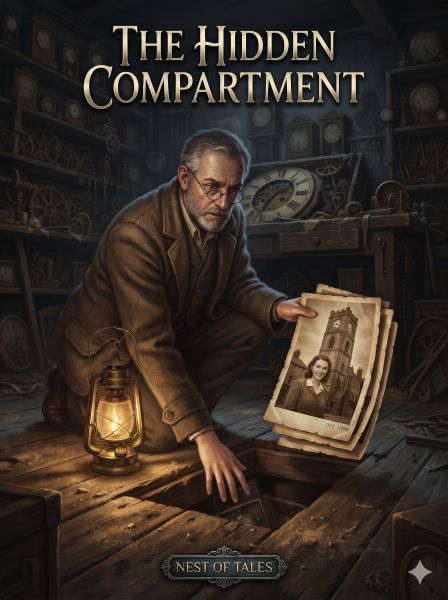
Episode 03: The Letter Signed by a Stranger
Following the detailed cartography of the parchment map, Arthur descended the stone steps leading down into the dark, vaulted chambers of the estate’s disused wine cellar. The air down here was heavy with the rich, fermented scent of old oak casks and stagnant moisture, completely cut off from the storm raging above ground. Armed with his flickering candle and the parchment map, he navigated the damp stone corridors until he reached the exact coordinates marked by the crimson cross. Here, the stone flagstones were slightly uneven, bearing deep, deliberate chisel marks around their perimeter. Kneeling in the dirt, Arthur used his iron chisel to pry up the loose paving stone, uncovering a small, waterproof metal tin embedded in the dry mortar beneath. He lifted the tin out, popped the stubborn lid, and extracted a folded sheet of crisp, high-grade stationery covered in precise, elegant handwriting. Bringing the candle closer, he began to read the letter by its flickering amber glow: “If you are reading this, Arthur, it means you have found the box and the key. Do not trust the man in the fedora; he is the descendant of the man who stole the estate from my family in nineteen-thirty. The archive holds the truth, but the ledger holds the debt. Find the double bottom of the desk before midnight, or the history of this house will be rewritten in blood.” The letter was signed not with a family name, but with a strange, stylized initial: V. Arthur’s hands shook as he folded the parchment, realizing that the warning was directed specifically at him, and that the man in the fedora was actively hunting for the exact same documents he now sought to uncover.
The Double Bottom of the Desk
With the warning letter clutched in his hand, Arthur hurried back upstairs from the damp cellars, bypassing the grand library and making his way directly to the private study of the late Lord Blackwood—a room that had remained locked and undisturbed since the patriarch’s death in the 1970s. The heavy oak door yielded easily to a firm push, the lock having rusted into useless decades ago. The study was a grand, imposing space filled with leather-bound volumes, taxidermy mounts, and a massive mahogany partner’s desk dominating the center of the room. Arthur crossed the creaking floorboards, set his candle down on the ink-stained blotter, and began to inspect the heavy desk for the hidden compartment mentioned in the letter. He ran his fingers along the intricate carved molding beneath the desktop, pressing and sliding every wooden peg and decorative scroll until his thumb caught on a concealed spring latch hidden within the interior kneehole. With a sharp, pneumatic hiss of long-trapped air, a false wooden panel dropped down from the underside of the desktop, revealing a shallow hidden drawer. Arthur reached inside, his fingers brushing against a collection of small, foreign objects: a foreign postal stamp, a tarnished silver ring, and a heavy brass stamp bearing an unfamiliar family crest. But nestled beneath these items was a small, leather-bound memorandum book with gold-gilded edges—the very ledger that held the debt the stranger in the fedora was so desperate to destroy.